


When you use brass material in your project, you will definitely be concerned about its density issue, which will directly determine whether brass material can be used in your project.
In this article, we will compare the densities of various metals and brass, as well as why density is so important for brass applications. In addition, we will also explore the key factors that affect the density of brass to help you better understand brass.
What is the Average Density of Brass?
The average density of brass is approximately 8.4 to 8.7 grams per cubic centimeter (g/cm³), a value that is moderately high among metallic materials, which gives it a good sense of weight and mechanical properties. Brass being an alloy of copper and zinc, the density varies with the type and proportion of the metals utilized.
It is crucial to understand the density of brass so as to evaluate how suitable the material is in a light weight structure or design. Understanding the density allows you to make informed decisions in engineering and manufacturing, ensuring optimal performance and reliability in your projects.
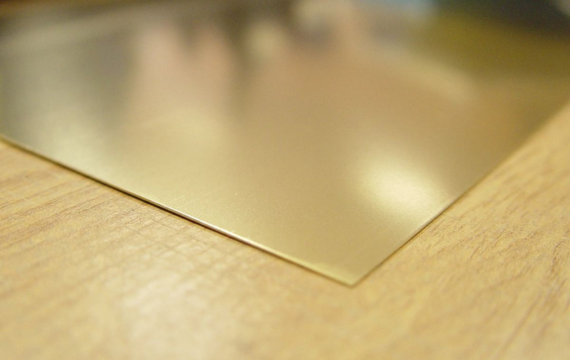
Why is Density Important for Brass Applications?
Lightweight Design
In fields such as aerospace, automobiles, and mobile devices that pursue lightweighting, density is the primary consideration. The density of brass is significantly higher than that of aluminium alloy (about 2.7g /cm³) and many engineering plastics. Therefore, brass components will be heavier in the same volume.
You must strike a balance between the excellent properties (strength, electrical conductivity) provided by brass and its weight. Understanding its density is crucial for ensuring performance and safety.
Cost-Effectiveness
Density will directly affect the material usage and final cost of individual parts. When manufacturing large quantities of parts, a higher density means that more weight of raw materials is consumed to produce the same quantity of products, directly increasing your material costs.
Without affecting performance, you can choose a brass grade with a slightly lower density (such as a higher zinc content) or control costs and enhance the price competitiveness of your products by optimizing the design to reduce the volume of parts.
Performance Correlation
The density is closely related to the mechanical and physical properties of brass. By adjusting the copper-zinc ratio and adding other alloying elements such as lead, tin, and aluminum to change the density, its strength, hardness, wear resistance, machinability, and corrosion resistance can be simultaneously adjusted.
For instance, high-lead brass has a higher density but excellent machinability, making it suitable for precision machined parts. The density of high-strength and highly corrosion-resistant naval brass (tinned) is also relatively high. Therefore, density, as an intuitive macro indicator, can help you quickly filter and match materials with application scenarios.
Comparing Density of Brass to Other Popular Metals
Now, let’s compare the density of brass to some of the most popular metals:
| Metals | Density (g/cm³) |
| Brass density | 8.4 – 8.7 |
| Aluminum | 2.7 |
| Copper | 8.96 |
| Zinc | 7.14 |
| Bronze | 8.8-9.0 |
| Steel | 7.8-8.1 |
| Lithium | 0.534 |
| Beryllium | 1.85 |
| Sodium | 0.97 |
| Magnesium | 1.74 |
| Potassium | 0.86 |
| Calcium | 1.54 |
| Scandium | 2.99 |
| Titanium | 4.5 |
| Vanadium | 6.11 |
| Chromium | 7.19 |
| Manganese | 7.47 |
| Iron | 7.87 |
| Cobalt | 8.9 |
| Nickel | 8.9 |
| Molybdenum | 10.28 |
| Silver | 10.49 |
| Tin | 7.31 |
| Neodymium | 7.01 |
| Ytterbium | 6.9 |
| Tungsten | 19.25 |
| Gold | 19.32 |
| Mercury | 13.53 |
| Lead | 11.34 |
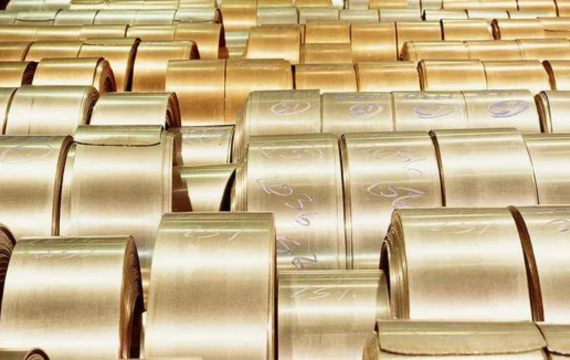
Density of Brass Alloys
Brass alloys are popular in many applications today. Unlike the pure brass, the density of brass alloys vary depending on alloying elements. Let’s explore some popular options:
| Brass Alloy | Density in g/cm³ |
| Red brass density | 8.75 |
| Yellow brass density | 8.47 |
| Naval brass density | 8.44 |
| Brass C3604 density | 8.5 |
| 260 brass density | 8.53 |
| Cartridge brass density | 8.53 |
| Muntz metal density | 8.45 |
| Admiralty brass density | 8.53 |
| Lead-free brass density | 8.4 |
Factors Influencing Density of Brass
Composition
The principal way through which you influence brass density is by the variation in concentrations of copper and zinc. Brass commonly contains about 60 to 70 % copper and 30 to 40 % zinc. However, when other elements like tin, lead, or aluminum are included in the chemical construction, the density becomes altered.
For instance, the density can be increased by adding more copper, while the density can be decreased by adding more zinc or lighter metals. The density of brass depends on the type of brass, say naval or leaded brass; the two may not have the same density. This in turn makes it possible to control the density of brass to fit certain industrial or mechanical conditions.
With the increase of zinc content, the overall density of brass alloy will decrease approximately linearly. For instance, brass with a copper content as high as 90% has a density close to 8.8g /cm³, while the common 64 brass (containing 60% copper) has a density of approximately 8.4g /cm³.
Impurities
Different types of impurities that may be present during the process of making brass affect the density of the end result. Any foreign materials getting into the manufacturing process, such as oxygen, sulfur, or silicon, may alter the density and uniformity of the alloy.
These impurities can result in porosities, cracks, or the presence of foreign matter within the material, leading to variation of porosity in the material.
In order to provide consistency and the required density of the alloy, it is necessary to reduce impurities. As for the quality of the material, a lesser amount of impurities in the higher-quality brass will mean a less variable density throughout the metal.
Temperature
It will also be seen how temperature greatly influences the density of brass. When brass gets hot, it increases in volume, causing the density to decrease for the same mass of the material in a larger volume. With brass, when it cools, it shrinks, and there is an increase in density as the molecules in the material are packed closer.
In case you have been using brass in places where high heat is involved, this thermal expansion is very important. For detailed and accurate applications, operating density should be modified by temperature parameters. High heat may also cause phase changes within the material, which will affect the microstructure of the material and therefore affect the density.
Microstructure
Density of brass is controlled by modifying its microstructures, which include grain size and phases of the material. During the manufacturing of brass, the microstructure of the material develops at the time of solidification and influences the density of the material. Usually, the samples with finer grains possess a higher density as they contain a minimal number of voids and internal spaces.
At the same time, in large grains, one can create defects that adversely affect the density in general. The cooling rate and the composition of the alloy must be controlled during the process in order to obtain the required microstructure. It is important to know that in improving the grain structure, the density is enhanced.
Brass may have different phases at room temperature, and their crystal structures and atomic bulk densities are different. For instance, the zinc content in the β phase is higher than that in the α phase, resulting in a slightly lower density. Therefore, even brass with exactly the same chemical composition can have an impact on density by altering its phase composition and proportion through different heat treatments.
Manufacturing Process
This is an indication that the type of process that you employ on the brass has a direct impact on its density. For instance, casting leads to the creation of small air pockets or voids, and thus the density of the brass is affected.
On the other hand, forging or rolling press the material together, thereby eradicating these gaps and enhancing compactness. Methods such as extrusion and drawing can also improve the density of the material by closing the grains or eliminating defects.
When manufacturing, the cooling rate, mechanical treatment, and the desired alloy composition enable you to achieve the best density you prefer. Each process has its strengths and weaknesses, and the right method has to be selected to ensure that the performance is up to par.
The Main Applications of Density-Based Brass
Mechanical Components
The high density of brass (approximately 8.4-8.7 g/cm³) provides the necessary mass inertia in mechanical systems that require stability and vibration resistance.
For instance, in heavy-duty bearing bushings, high-pressure valve cores, watch balance wheels and counterweights of large instruments, sufficient density ensures the stability of the components during movement and the durability of the seals.
Structural Components
The density of brass achieves an engineering balance between its performance and material cost. It is widely used in the manufacture of bolts, nuts, pipe joints, gears and pump bodies.
In such applications, you can comprehensively consider its excellent strength, corrosion resistance, processability and raw material cost, which is crucial for cost control in large-scale industrial manufacturing.
Functional Devices
In some precision engineering scenarios, the density of brass can be used as a design parameter to achieve specific functions.
For instance, in acoustic equipment such as the gongs, hammers and vibration damping devices of high-quality Musical Instruments, their density can be used to precisely tune the resonant frequency or absorb mechanical vibrations.
In addition, for rotating machinery that requires precise balance, such as gyroscopes and flywheels, brass is often used to make fine-tuning counterweights due to its ease of processing and stable density, in order to correct the moment of inertia of the system.
FAQ
Why is the Density Value of Brass within a Range (8.4-8.7 g/cm³)?
Because brass is an alloy, its density fluctuates with the zinc content and the addition of elements such as lead and tin. The higher the zinc content, the lower the density, while adding high-density elements (such as lead) will increase the density.
What is the Formula for Calculating the Weight of a Brass Rod?
Weight (kg) = volume (cm³) × density (g/cm³) ÷ 1000. Density is a necessary key parameter for calculating weight. Using incorrect density values can lead to deviations in the calculation results.
Will There Be a Difference in Density between Brass Castings and Extruded Products?
There will be minor differences. Due to plastic deformation, extruded products have a denser structure, and the measured density is usually closer to the theoretical value. The casting may have a slightly lower density due to a small amount of shrinkage porosity (the difference is generally less than 0.5%).
What are the Measurement Standards for the Density of Brass?
The density measurement of brass usually follows standards such as ASTM B134/B135 and is carried out using the Archimedes displacement method. We ensure the accuracy of density data by regularly calibrating the equipment and cross-validating it with the results of spectral composition analysis.
What is the Relationship Between the Density and Electrical Conductivity of Brass?
It generally shows a negative correlation. Brass with a higher density (such as 90% copper content) has better electrical conductivity (about 45% IACS), while brass with a lower density (such as 30% zinc content) has a lower electrical conductivity (about 28% IACS).
Final Thoughts
This article introduces the density of brass from multiple dimensions. Understanding the density differences between brass and other metals can help you choose the most suitable brass for your project.
The density of brass is crucial to its mechanical strength, durability and other properties. As a professional supplier of brass materials, KDM can provide you with professional testing and material selection services. Contact us immediately to get a professional quotation!