


As a type of common material, metal is widely used in various industries, such as aerospace, mold manufacture, and more. The metal cutting is the basic processing method to achieve different components, and it directly determines the product quality, production efficiency, and precision. This article will provide a comprehensive overview of this process for you.
What is Metal Cutting

Metal cutting is a process of removing materials, which can be achieved by various cutting tools. With the help of mechanical force or energy, the excess metal material can be removed from the surface of workpieces. This process is mainly used to machine the shape, size, and surface finish of metal materials, and is one of the most commonly used methods in metal machining. Based on the difference of processing methods, it can be divided into continuous cutting, interrupted cutting, cold cutting, and hot cutting. If your project involves metal products, metal cutting is an essential process.
Working Principle of Metal Cutting
Metal cutting is mainly completed by the relative motion between cutting tools and metal workpieces. The cutting force generated by tools can cause plastic deformation in the metal material, which will produce chips. This process of metal cutting typically includes three key factors that may affect finished products.
- Cutting Forces: The forces generated during the cutting process include the primary cutting force, feed force, and reaction force. These forces are directly connected to equipment loads, wear level of tools, and processing stability. High cutting forces must work with a high-strength worktable and durable tools to ensure a stable and safe process, thereby extending the service life of equipment.
- Cutting Heat: In the process of metal cutting, there is a large amount of heats caused by the metal deformation and friction. The cutting heat is an important factor affecting both products and tools. It is better to install a thermal dissipation device for the cutting equipment to prevent workpiece dimensional deviations.
- Chips: Different metal materials feature significant different deformation patterns during the cutting process, thereby generating different types of chips. For example, the continuous chips are common for low-carbon steel materials. While cast ironis more easy to generate breakage chips. You can determine cutting parameters and cutting tools based on these characteristics.
Common Process Types of Metal Cutting
Based on the difference of machining methods and energy sources, the process of metal cutting can be mainly divided into traditional and advanced(non-traditional) metal cutting. Each type features unique advantages and features to meet different project demands.
Traditional Metal Cutting
The traditional metal cutting processes typically rely on direct contact between tools and workpieces to generate cutting forces. These processes use the cutting force to achieve removing metal materials, and are widely used for various applications due to their mature technology.
- Turning: Through the rotation of workpieces and feeding of tools, the turning supports machining cylindrical surfaces, end faces, and tapered surfaces. It is suitable for shaft-type and disc-type components, and is the most basic and common process of metal cutting.
- Milling: The milling process employs rotating tools to achieve multi-directional cutting of workpieces, which is significantly suitable for components with complex structure. It can be used to machine flat surfaces, slots, contours, and three-dimensional structures. The milling process also offers high flexibility to achieve multi-axis linkage, thereby improving product precision.
- Drilling: Hole structures are generally handled by the drilling process, which has high demands on chips removing and cooling. It is simple to operate and offers high efficiency to machine mounting holes, connecting holes, and more. You should also consider the hole depth and diameter when using this process to ensure a stable machining process.
- Boring: The boring is a type of finishing process based on existing holes to improve the dimensional precision and surface finish of holes. This process is typically used for mechanical components that demand high assembly precision. It offers high capacity for controllability and precision, and is also suitable to be integrated with CNC equipment.
- Grinding: For components with high demands on precision and surface finish, the grinding process is suitable. It employs a high-speed rotating abrasive wheel to remove micro metal materials, while also ensuring high precision and consistency. The grinding is suitable for stainless steel, quenched parts, and other similar workpieces. Its efficiency is lower than other processes due to its minimal removal material.
Advanced Metal Cutting
For some special materials or industries, traditional metal cutting cannot meet their demands at all. While the advanced metal cutting becomes more suitable to handle complex structure and high-strength materials. The following are common processes of advanced metal cutting:
- Laser Cutting: The laser cutting achieves high-precision cutting through the high-energy laser beam, which can melt or vaporize metal. It is very suitable to handle metal sheets, precise contours, and complex patterns due to its high precision and automation. But this process also features a heat-affected zone, which may cause certain effects to material performance.
- Plasma Cutting: For medium-to-thick metal sheets, the plasma cutting is more suitable to improve machining efficiency. This type of metal cutting process uses a plasma arc with high temperature to melt metal materials. It features rapid cutting speed and relatively low investment to enhance production efficiency while also decreasing your cost. While if your project pursues extremely high precision, the laser cutting is more suitable than the plasma cutting.
- Wire EDM Cutting(Electrical Discharge Machining): EDM removes materials by using electrical spark discharge between continuous moving electrode wires and the workpieces. It supports machining complex shapes and high-strength materials, but maintains a relatively low processing speed. The EDM is suitable for precision molds and complex contour parts, especially the high-hardness metal.
Metal Cutting Equipment
CNC Machine
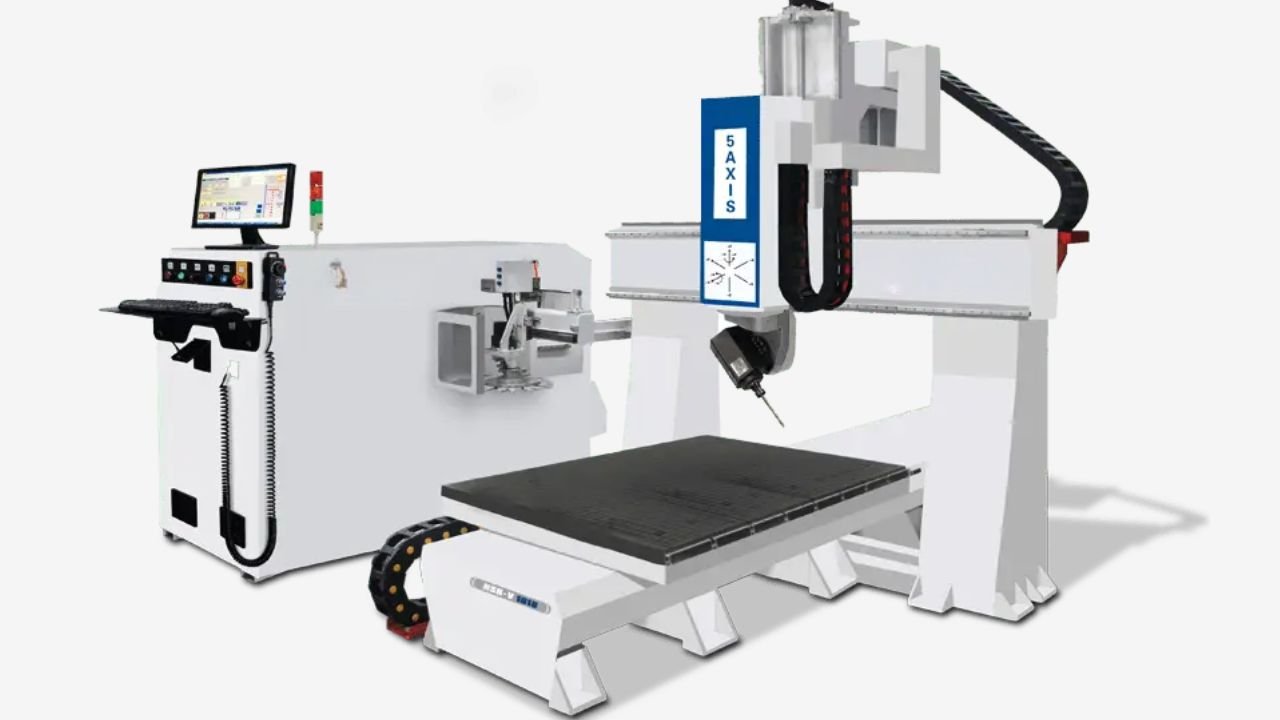
- Features and Advantages: CNC machines are typically equipped with automated control systems to achieve precise control for the metal cutting, thereby enhancing production precision. It supports handling complex structure and achieving multi-process machining to meet different project requirements. The CNC machine offers a stable and repeatable machining process, while also reducing errors caused by manual operations.
- Common Types: Based on the different machining capacity and size of CNC machines, they can be divided into various types. Common types of this machine include CNC lathe, CNC milling machine, CNC drilling machine, and CNC grinding machine. You can choose a suitable one based on actual demands.
- Suitable Applications: CNC machines are suitable for medium to large scale of production, ensuring high consistency and delivery reliability. For components with high requirements on dimensional precision, this type of machine is helpful to meet the demand. It is also used to achieve standardized processing across multiple operations.
Machining Center
- Core Configuration: A machining center is typically equipped with a bed, which offers high rigidity to ensure stability during the process of metal cutting. The high-strength bed also reduces pressure generated by cutting forces to extend the service life. The machining center can be also equipped with an ATC system to improve the speed of changing tools, thereby enhancing machining efficiency while also reducing manual errors. If you have requirements, it also offers capacity on multi-axis coordination to handle more complex components.
- Features and Advantages: The machining center completes multiple processes with only a single setup, which can significantly reduce positioning errors. This machining capacity also improves the entire production efficiency and consistency, and is suitable for large-scale projects. The machining center is also a type of highly integrated equipment, supporting various machining processes to handle components with complex structures.
- Common Types: Based on its different structures, the machining center is typically divided into vertical machining center, horizontal machining center, and 5 axis machining center. Different types of this machine feature different machining capacity to handle various components.
Multi-Tasking Machines(MTMs)
- Features: The MTMs integrate multiple machining processes into the single machine to achieve high efficiency and high production capacity. By reducing the multiple workpiece setups, this type of machine improves production precision while also enhancing the entire efficiency. This can also decrease the dimensional errors caused by repeat setups.
- Suitable Applications: The MTMs offer different forms such as turning-milling or milling-grinding composite machines to adapt to different projects. And they are suitable to handle complex shafts, irregularly shaped parts, and other components that have high demands on precision and consistency. It is also widely used in the small-batch production or multi-product manufacturing, improving overall manufacturing flexibility.

Metal Cutting Tools
In the process of metal cutting, tools are a key factor to achieve material removal and affect the entire production efficiency. When selecting metal cutting tools for your project, you should not only focus on their costs, but also consider the stability and reliability.
Structure of Metal Cutting Tools
The metal cutting tools typically consist of a tool body and cutting edge. Their shapes, materials, and coatings are directly connected to the cutting capacity. Key parameters of the metal cutting tools including angle, rigidity, vibration resistance, and chip removal capability need to be adjusted based on the actual machining process and metal types. A proper design of metal cutting tools can significantly resist cutting force and control the cutting heat, thereby improving the surface finish of final products.
Common Materials of Metal Cutting Tools

- High-Speed Steel (HSS): Metal cutting tools made of the high-speed steel feature excellent toughness and machining stability, which is very suitable to handle tools with complex shapes and achieve low-speed cutting. This type of material offers high resistance capacity on impact, and is economic. If your project has high demands on wear resistance or thermal resistance, the HSS may be not suitable.
- Carbide: The carbide is one of the widely used materials of metal cutting tools, and is mainly used for medium to high speed of cutting processes. It features high hardness and good wear resistance to extend the service life and ensure stability of the metal cutting process. The metal cutting tools made by carbide materials are suitable for automated and continuous operation due to their excellent performance on strength and hardness.
- Ceramics: For applications within the environment that demands high temperature and high cutting speed, the ceramic tools are more suitable. They offer extremely high thermal resistance to withstand high temperatures. In addition, the ceramic tools are suitable to handle cast iron or hardness materials. But they feature relatively low toughness that cannot withstand too large impact, which may cause breakage or damage issues.
- PCD/CBN: If your project involves high-end precision machining, the PCD and CBN materials are commonly used to meet extremely high precision demands. For example, the metal cutting machine can be equipped with PCD insertsto improve the production efficiency while also ensuring excellent accuracy. This type of metal cutting tools typically feature a long service life and high reliability, which can reduce production loss caused by downtime.
Key Factors Affecting Metal Cutting
The final effect of metal cutting is not only determined by a single factor, but connected to comprehensive factors. Learning these key factors that affect metal cutting may help you make a better operation decision, ensuring high product quality while also enhancing the entire efficiency.
Properties of Processed Metals
Different metal materials offer significant differences in physical and mechanical properties, such as hardness, strength, roughness, and thermal conductivity. Their properties directly affect the metal cutting process, including cutting methods, tools types, and key parameters. For example, stainless steel generally demands high wear resistance and good heat control capability on cutting tools, preventing dimensional errors caused by work hardening. Although aluminum alloy features high thermal conductivity and low cutting resistance, it is easy to stick to the cutting tool.
Cutting Parameters
The key cutting parameters are also an important factor affecting metal cutting that you should focus on, including cutting speed, feed rate, cutting depth, and other parameters settings. Based on the actual project requirements, you can set different cutting parameters to meet the demand. In addition, suitable cutting parameters can obtain a balance between the service life of both tools and equipment, production efficiency, and product quality. It is better to adjust the cutting parameters based on the process changing rather than using a single setting.
Features of Equipment
Metal cutting is also sensitive to the structural rigidity and moving precision of the equipment. Below the same cutting parameters, there may be different product quality due to the difference of equipment features. So core components of metal cutting equipment should be considered when choosing the machine, including the bed, spindle system, guideways, and others. You should ensure the equipment you choose features high rigidity to prevent vibration, thereby improving dimensional precision and surface roughness.
Tool Condition
The tool condition affects the production quality directly. It includes dimensional deviation caused by tool wear, low surface quality due to edge blunting, and equipment or workpiece damage caused by tools breakage issues. By regularly changing tools, tool life management, and condition monitoring, you can significantly reduce the risk of unplanned downtime, thereby ensuring production quality while also decreasing losses.
Cooling, Lubrication, and Chip Removal
For the stability and efficiency of the metal cutting process, a proper cooling and chips removal system is useful. The cooling and lubrication system not only controls the heat generated during the cutting process, but also reduces friction between the cutting tool and the workpiece. It will provide high surface finish for your products and reduce wear levels of cutting tools. In addition, the chip removal system is also helpful to ensure continuous operation by removing chips in time, decreasing the failure or damage rate of the machine caused by poor chip evacuation.
Applications of Metal Cutting

Automotive Industry
The metal cutting is widely used for automotive due to its high production efficiency and excellent dimensional accuracy. Common applications of metal cutting in the automotive industry include engines, transmissions, chassis, and structural parts. By using the CNC metal cutting equipment with high automation, the automotive industry can achieve a highly efficient production process while also ensuring high component precision.
Aerospace
The aerospace industry typically requires titanium alloys, high-temperature alloys, and other difficult-to-handle materials to meet the structural strength demands. It also has high requirements on precision, surface finish, and strength of components. The 5 axis metal cutting machine is suitable to achieve precision manufacture and is reliable to ensure high product quality. It can be equipped with high-performance tools and automated systems to enhance production efficiency while also improving the precision.
Energy and Electrical Equipment
If your project involves large structural parts and functional components like the energy and electrical equipment, the metal cutting is also an indispensable part of the production process. It is generally combined with heavy-duty lathes or other high-power equipment to meet the requirement of high-strength material processing. This equipment also offers high stability and strength during long term use, ensuring the reliability of products.
Heavy Industry
For the heavy industry, durability and cutting capabilities of equipment are more important than the extreme precision. The metal cutting machine is suitable for use in this industry due to its high structural rigidity and reliability, meeting the demand of long-time and high-load operation. It supports removing chips during the production process to reduce failure or damage, thereby ensuring high stability of the machine.
FAQs
Q: How to optimize the stainless steel cutting process, preventing edge discoloration, slag adhesion, or thermal deformation?
A: When cutting the stainless steel, you can use the nitrogen or argon as shielding gas, preventing oxidation and discoloration. For the slag adhesion issues, adjusting the laser power and speed is helpful to reduce them. You can also employ layered cutting to handle thick sheets, reducing chips or slags. In addition, a dynamic focal point is also helpful to control the heat input, thereby decreasing the risk of thermal deformation.
Q: How to balance the cutting speed and cross-section quality when cutting carbon steel?
A: It is harmful for the final product’s quality to use too rapid cutting speed, which may cause rough cross-sections and slag buildup at the bottom. While a too slow speed is also dangerous to cause overburning and edge melting. You can employ an automated system to reduce the cutting speed at corners while also accelerating on straight sections, achieving an ideal cutting condition.
Q: How to ensure an extremely high cutting precision within the range of ±0.05mm?
A: You should maintain a constant-temperature workshop firstly to reduce dimensional errors caused by thermal expansion and contraction. Before the metal cutting process, you can also internal stress relief of metal sheets to ensure stable cutting production. In addition, regular equipment calibration is also helpful to ensure high cutting precision.
Final Thoughts
After this article, we believe that you have some learning about metal cutting, including equipment, tools, affected factors, and applications. As a professional sheet metal processing manufacturer, KDM offers one-stop sheet metal fabrication services to meet various demands. If you have any questions about metal cutting or products, please feel free to contact us for customized solutions.